
FAQs
Background Information
On January 25, 2023, the Board of Supervisors (Board) directed County staff to advance sustainability and environmental justice collaborations by establishing a regional social equity working group. In response to this Board direction, OSEJ collaborates with internal and external stakeholders to meet the intent of the Board’s directive and the community identified needs of those most affected by environmental injustices.
The Board is not involved in the selection of the Workgroup members. There are no appointed members for this Workgroup.
OSEJ staff keeps the Board of Supervisors informed of the Workgroup’s progress.
The broader purpose of the Workgroup is to remove barriers for those who encounter environmental injustices to shape regional climate and social equity programs and policies. The Workgroup offers a diversity of perspectives, opinions, and experiences for the County and other jurisdictions to seek advisement on climate justice topics. The members provide valued feedback and support for regional initiatives, services, and programs related to the climate emergency based on their priorities. The desired outcome is for communities disproportionately impacted by environmental injustices to have shared power in advancing sustainability efforts that directly affect their lives.
The Workgroup is a key part of actualizing the County’s commitment to community engagement, environmental sustainability, and social equity.
The Workgroup believes "environmental justice and climate justice are achieved when transformative, collaborative actions are taken to adapt to climate change and address structural and systemic inequities—while upholding Tribal equity and values—so all people and nature can live harmoniously in healthy, safe, prosperous, and inclusive communities."
Environmental justice starts with the understanding that past and current practices have disproportionate and negative impacts on particular populations typically Black, Indigenous, and people of color. It is government’s responsibility is to listen, learn, and study practices and address them or create new processes that make them obsolete and eliminate systemic inequities and human and environmental burdens in the past to ensure they do not occur in the future.
How are the Board of Supervisors involved?
Why was this group created?
What is environmental justice?
About the Workgroup
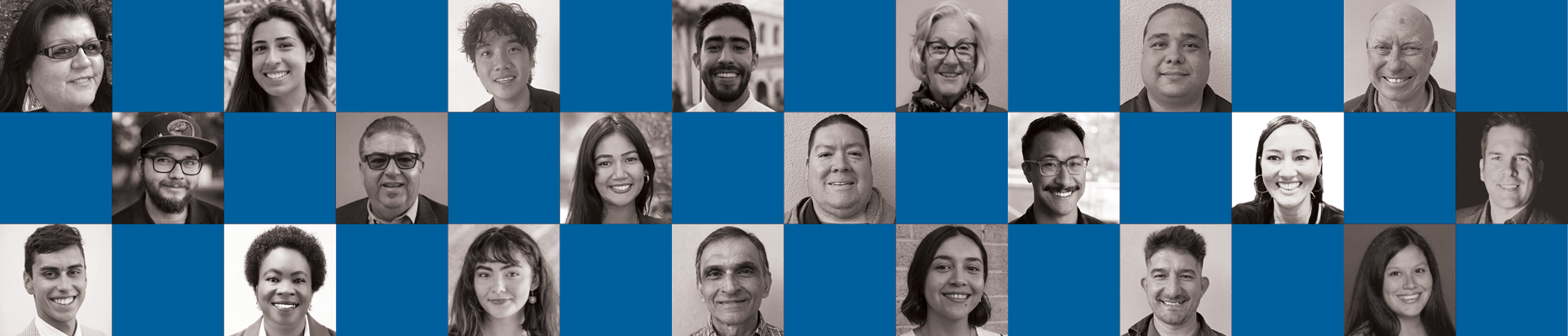
The Environmental Justice Workgroup (Workgroup) is an advisory group of local organizations and individuals committed to collectively addressing environmental justice priorities.
Facilitated by the Office of Sustainability and Environmental Justice (OSEJ) in collaboration with other local and regional partners across jurisdictions, the Workgroup advises on sustainability and environmental justice issues striving to improve people’s quality of life in the San Diego region.
The Workgroup is an advisory body without legislative or governing authority. It will work with County and other jurisdictions to advise on relevant projects, initiatives, and services. The Workgroup is not subject to the Brown Act or other formal procedures as an advisory group.
The Workgroup consists of no more than 21 members that are selected through an application process.
The Workgroup members advise on regional sustainability and social equity efforts for the County and other local governments during virtual and in-person meetings.
The members also serve as ambassadors for their communities and organizations; they further outreach efforts related to climate and environmental justice topics presented to the group.
The Workgroup members co-develop a ‘priorities plan’ to inform climate, cultural, and social equity policies, projects, and programs based on their interests.
This is a great opportunity for collaborative people who care about making a difference for their community and the environment. Some of the specific benefits include:
Influencing the work of the County, local jurisdictions, and regional agencies by informing climate initiatives
Being a part of a group shaping meaningful change
Learning from other perspectives
Serving the community and meeting new people
Receiving participatory benefit of $150/meeting
Partaking in training opportunities that may be available
The County values lived experience, community knowledge, volunteer work, cultural knowledge, and grassroots leadership alongside professional experience. Applicants do not need formal education, technical expertise, or government experience to be considered. We encourage applications from individuals representing historically underserved, disproportionately impacted, and underrepresented communities.
Members must live in San Diego County and meet at least one of the following criteria to support a diversity of perspectives and experiences in the group:
Residents with lived experience with environmental injustices
Members of a local Tribe
Youth between ages 16-24
Leaders from community-based or Tribal organizations working in health, social, economic, or environmental fields that focus on equity
Academics or researchers with expertise in addressing the underlying causes of health, social, economic, or environmental disparities in communities impacted by unjust systems
Other self-identified characteristics will be considered to strengthen diverse representation particularly for groups often marginalized or under-represented in public participation processes (i.e., people who identify as Black, Indigenous, and people of color; LGBTQ+; youth; immigrants and refugees; unhoused; low-income; or live in an unincorporated or rural area)
The Workgroup will be comprised with people who have formal education and direct experience in ecological and social justice subject areas. All participants’ perspectives, whether learned or lived, will be valued.
Workgroup members contribute their perspectives on relevant climate and environmental justice topics. They may gather input or share information with their networks.
The commitment of service is a two- or three-year term.
Members participate in an orientation and attend up to ten meetings each year. Participants must attend 75% of the meetings each year.
Members may be co-mentors for new members.
Members assist with EJW program evaluation.
Staff from the County of San Diego Office of Sustainability & Environmental Justice are managing and facilitating the Workgroup with the support of internal and external partners.
Cross-sector partners may support workgroup meetings as co-leads on particular topic areas.
The team can be reached at osej@sdcounty.ca.gov and at this webpage.
As a part of the process for the County and other jurisdictions’ presentations to the group, updates about how the Workgroup’s feedback will be incorporated into the efforts is requested. Additionally, periodic updates on complex projects or initiatives may be needed to relay the outcomes based on the group’s advisement.
Each jurisdiction presenting to the group may have their own way of tracking outcomes of the projects the group informs.
- The Workgroup is a program under the Regional Decarbonization Framework, which promotes public, private, and civic interests working together to achieve zero carbon emissions by 2045. The Workgroup also consults on the County’s Climate Action Plan Equity Implementation Framework.
What is the Environmental Justice Workgroup?
What do Workgroup members do?
What are some of the benefits of participating?
What are desired qualities of Workgroup members?
What are the expectations of Workgroup members?
Who is leading the group?
How long is the term commitment?
Members are expected to serve a two to three-year term for group cohesion and continuity of the Workgroup’s goals. Participants must attend at least 75% of the meetings each year.
How many members are a part of the Workgroup?
There are 21 members in the Workgroup. There may be 3-5 alternates selected in the case a member no longer participates.
When and where are the meetings?
Meetings will be both in-person and in virtual settings. They are usually on the third Tuesday evenings of each month for two hours. Meeting locations vary and are accessible to public transportation, such as libraries or other community venues.
How will the Workgroup's recommendations be integrated into projects and programs, and how will they be tracked for progress?
How is this Workgroup related to the County’s Regional Decarbonization Framework and Climate Action Plan?
Application Process
The application process includes an initial written application and a follow-up virtual conversational panel interview for committee selected individuals.
The initial written application has four parts: contact information, questions, demographic information, and a commitment statement. It is anticipated that it will take 15 minutes to one hour to complete depending on the level of detail provided.
Application help is available for reading, writing, translating, or navigating technology at least five working days before the due date. You can orally respond to the application if needed. Additionally, there will be two virtual information sessions hosted at different times for further Workgroup information.
The application is available in print by contacting osej@sdcounty.ca.gov or electronic formats by visiting this webpage.
Potential members will submit applications. They will be reviewed for the specified qualifications by a committee of County staff. This year the Office of Sustainability and Environmental Justice, Office of Equity and Racial Justice, Planning and Development Services, Public Health Services, Office of Emergency Services, and the Office of Economic Development and Governmental Affairs.
If applicants for the Workgroup are not selected for this term after being interviewed, they may be invited to join when member seats open.
Yes, the Workgroup application process specifically seeks diverse membership in terms of the following:
Experience - Community leaders, residents with lived experience, and subject matter experts with an array of interests and perspectives that will add to the breadth of the group.
Geography - Members from each supervisorial district, local sovereign Tribal nations, rural and urban areas, and members from unincorporated areas.
Personal Identity - Race, ethnicity, sexual orientation, gender, age, and income level will be considered if shared, since this information is optional on the application.
How do you apply? What does the application consist of?
How will members be selected?
Is there a goal to have diversity reflected in the membership?
How many applicants will be interviewed?
There will be one round of interviews with no more than 25 applicants for approximately ten member seats and up to five alternates. The intention of the conversational interviews is to get to know the potential members’ interests, understand areas of alignment with the Workgroup’s goals, answer any questions about the Workgroup, and verify commitments to the Workgroup.
Can we apply as a representative of a local organization or as an individual?
Applicants can apply as a member of a community-based organization, academic institution, or apply on their own. We are looking for representatives from community-based organizations and universities that work in social equity, health, social services, and in environmental fields.
Can County of San Diego employees participate in the Workgroup?
County employees are ineligible to participate as a member of the Workgroup. The Workgroup is intended for members of the public. County employees can be a part of Employee Resource Groups.
Is there an age limit to apply for the Workgroup?
Members need to be at least 16 years old. Members under the age of 18 need parent/guardian permission to participate.
Public Participation
Please visit the Environmental Justice Workgroup website for details about the Workgroup’s activities.
Workgroup members will be asked to share information regarding Workgroup topics with their community networks to expand the reach beyond the advisory group. There may be opportunities to participate as an informant through member communications within communities.
This is an informal advisory group that is not subject to the Brown Act, and the meetings are not open to the public. Public participation in the meetings is by invitation only.
If the public would like to make a comment or reach the Workgroup staff, they can do so in writing. Correspondence can be sent to osej@sdcounty.ca.gov or to the County Administration Center c/o Office of Sustainability and Environmental Justice at 1600 Pacific Highway, Suite 358, San Diego, CA 92101-2422.
- One of the desires of the Environmental Justice Workgroup is to collaborate across governmental organizations to support environmental justice initiatives for the region. Please reach out to OSEJ staff for an initial discussion if you have any collaborative opportunities for consideration at osej@sdcounty.ca.gov.
How can the public stay informed about the Workgroup's activities and are there ways for the public to participate outside of membership?
Are there opportunities to collaborate with the Workgroup on environmental justice initiatives?